

If you’ve been thinking about going solar, 2026 is honestly one of the best times to make that move. Electricity bills aren’t getting any cheaper, and the government is actively pushing rooftop solar through subsidies that can cut your installation cost dramatically. The question most people have isn’t whether to go solar – it’s how the whole process actually works. That’s exactly what this guide covers, with JAKSON Solar walking you through every step.
How the Installation Process Works

Before a single panel goes on your roof, JAKSON Solar’s team comes out to understand your specific situation. This site assessment looks at your roof’s structural strength, any shading from nearby trees or buildings, which direction your roof faces (south-facing works best in India), and how much electricity you actually consume on a monthly basis.
This matters because no two homes or businesses are the same. A good solar system isn’t just about sticking panels on a roof; it’s about designing something that performs well for your space over the next 25 years. Based on this evaluation, JAKSON Solar’s engineers put together a custom design covering the right panels, inverter type, mounting structure, and wiring layout customised to your space.
Once approvals are in place, the actual installation follows a clear sequence:
- Mounting structure made of galvanised or aluminium frames goes up, and is securely bolted or clamped to your roof at the optimal tilt angle for your location
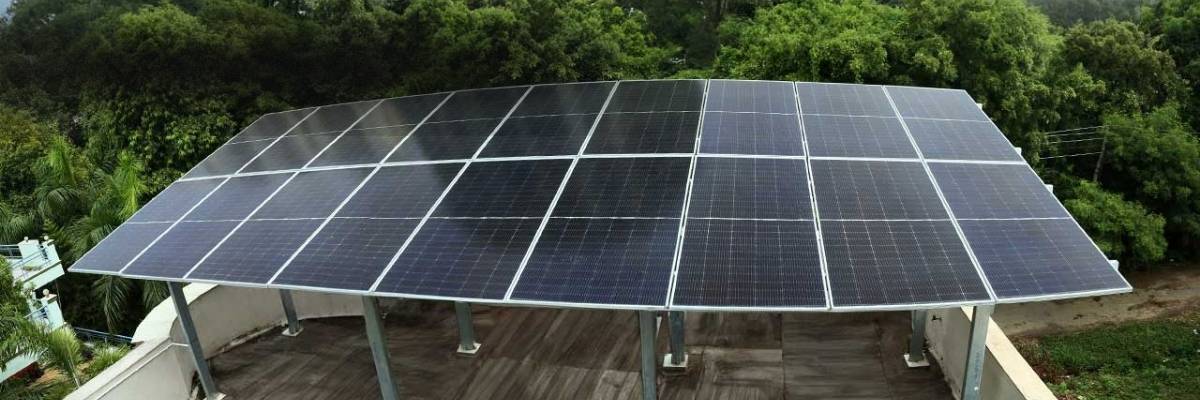
- Panels go on – Solar panels are fixed onto the frames at the right angle to capture maximum sunlight throughout the day
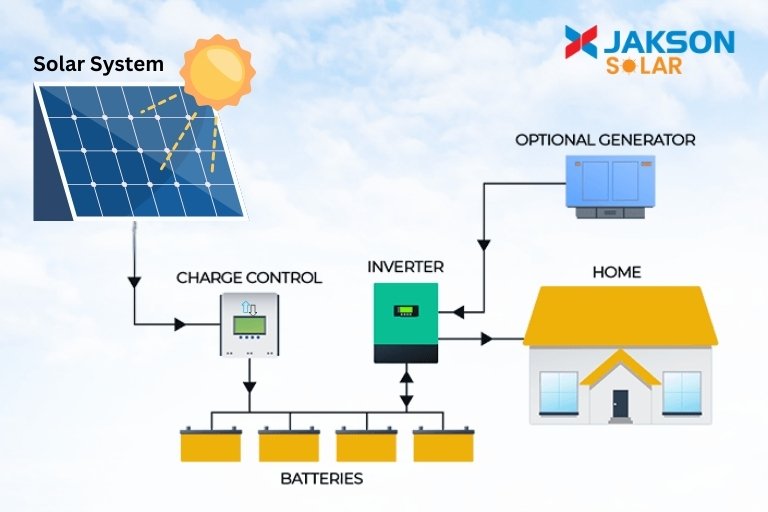
- Inverter installation – Depending on your system, a string inverter, microinverter, or hybrid inverter is installed and connected to the panel array
- Wiring and safety boxes – AC and DC wiring is routed carefully through DC and AC distribution boxes, complete with lightning arrestors and proper earthing
- Net metering application -JAKSON Solar handles the paperwork with your state DISCOM so any surplus power you generate can flow back to the grid and earn you bill credits
- Testing and commissioning are done before declaring the system live. Everything gets tested, like electrical safety, output performance, and grid compatibility
Nothing gets switched on until the team is satisfied that your system is safe, efficient, and optimally performing.
How Long Does Solar Installation Take?
It is usually the first question people ask, and the honest answer is that it depends on the size of your project and how quickly local permits come through. That said, JAKSON Solar works with dedicated project coordinators to keep things moving.
For homes and residential properties:
- Once approvals are in hand, the physical installation wraps up in just 4–7 days
- Start to finish – site visit, design, permits, installation, commissioning – the whole journey takes about 6–8 weeks
For factories, offices, and commercial setups:
- The on-site installation itself takes 3–6 weeks, given the larger system size
- The complete timeline from first survey to final commissioning runs 12–16 weeks, factoring in detailed engineering and regulatory approvals
For businesses that can’t afford long delays, JAKSON Solar’s planned scheduling approach keeps projects on track – which is a big reason why factories and offices consistently choose JAKSON as their solar partner.
Want to know how much a residential solar system will cost?
What Does Solar Panel Installation Cost in India in 2026?
Let’s talk numbers, because this is where most people’s decisions get made. In 2026, residential solar installation in India will cost roughly ₹60–65 per watt before subsidies. Here’s what that looks like by system size:
For commercial installations, costs drop to ₹46–56 per watt thanks to economies of scale, though the final figure depends on your system capacity, whether you’re going on-grid or hybrid, and site-specific factors.
Now here’s the part that changes the math entirely – government subsidies. Under schemes like PM Surya Ghar, eligible residential customers can get subsidies that reduce total installation costs by 20–70%. JAKSON Solar’s team helps you through the subsidy application process so you don’t leave money on the table.
And the payback? Most customers recover their investment in 4–7 years through savings on electricity bills – and then enjoy essentially free power for the next 18–20 years of the system’s life.
Homes vs. Businesses – What’s the Difference?

The core process is similar, but the scale and complexity are quite different.
For homeowners, the focus is on a clean, safe installation that doesn’t compromise your roof’s waterproofing or structure. Most residential systems fall in the 1–10 kW range, and the goal is straightforward – lower your monthly electricity bill.
For commercial clients – factories, warehouses, office complexes – the requirements go up significantly. You’re dealing with higher electrical loads, more robust mounting systems, and more complex coordination with the DISCOM for net metering. JAKSON Solar’s engineering team has the depth and experience to manage these larger projects without cutting corners.
In both cases, every installation follows the same quality standards, and every system is built to last the full 25-year lifespan.
Frequently Asked Questions
How much roof space do I need?
Plan for roughly 10–12 sq. metres of clear, shadow-free roof area per 1 kW of capacity. A 3 kW system needs around 30–36 sq. metres of usable rooftop.
Can I install solar in a rented property?
Yes – as long as the electricity connection is in your name and you have the roof owner’s written consent. JAKSON Solar can guide you through the documentation.
What roof types work for solar?
Flat RCC, sloped, metal sheet, tile – most roof types work well, as long as the structure can bear the load. The site assessment checks this before anything else.
What is net metering?
It’s a billing system where the excess solar power you generate is exported to the grid, and you get credits on your electricity bill. JAKSON Solar handles the entire application process with your DISCOM.
Are subsidies still available in 2026?
Absolutely. The PM Surya Ghar scheme and MNRE rooftop solar subsidies can reduce your costs by 20–70%, depending on system size and your state’s policy. The key is getting the installation done through a DISCOM-registered vendor, which JAKSON Solar is.
What about cloudy or rainy days?
Panels still generate electricity on overcast days, just at a lower output. For areas with extended low-sunlight seasons, JAKSON Solar’s team can recommend a hybrid system with battery backup for uninterrupted power.
How much maintenance does a solar system need?
Very little, honestly. Occasional panel cleaning and a yearly system health check is typically all you need. JAKSON Solar also offers Annual Maintenance Contracts (AMCs) if you want complete peace of mind.
How long do the panels last?
Quality solar panels are built to last 25+ years. JAKSON Solar backs their systems with manufacturer warranties on panels and inverters, plus responsive after-sales support throughout the system’s life.
Why JAKSON Solar?
JAKSON Solar isn’t just another solar solution provider; it’s a manufacturer-backed, end-to-end solutions provider with a record of delivering reliable solar installations for homes and large commercial spaces across India. The difference shows up in minor details like thorough site assessments, honest quotes, certified installation methods, and guaranteed after-sales support. Going solar is a 25-year decision. It makes sense to make it with a partner you can trust.
Book your free site assessment with JAKSON Solar today and get a customised installation plan built around your property, your usage, and your budget.