

TOPCon Solar Panel Price in India: What You Need to Know Before You Buy
If you are comparing solar quotes, the TOPCon solar panel price is usually the first number that stands out, and it can look higher than older panel types.
This guide breaks down what TOPCon panels cost in India today, per watt and by system size, how they compare with PERC, and why the extra output often pays back the difference.
Key takeaways from this article
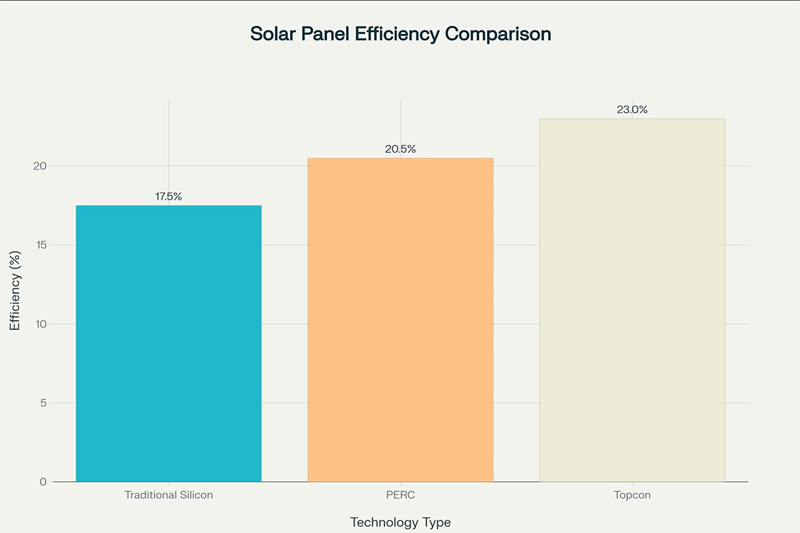
- TOPCon technology provides superior performance: TOPCon solar panels reach module efficiencies of around 23% (JAKSON’s Helia NXT TOPCon modules are rated up to 23.25%), compared with 20-21% for PERC and 15-20% for older conventional silicon panels. So, Topcon Solar module can generate 15-30% more electricity on the same roof space with the same sunlight when compared with PERC and conventional solar panels.
- Competitive Pricing with Strong ROI: The TOPCon solar panel price in India typically ranges from ₹25 to ₹35 per watt for DCR-certified panels used in subsidised home systems. With the PM Surya Ghar subsidy applied, a 3 kW TOPCon system typically pays for itself in about 3.5 to 6 years, depending on your electricity tariff and state.
- Strong Support from Indian Government: The PM Surya Ghar scheme offers a direct subsidy of up to ₹78,000 for residential rooftop systems of 3 kW and above, and TOPCon panels with DCR certification qualify.
What is TOPCon Solar Panel Technology?
TOPCon Full Form: Tunnel Oxide Passivated Contact
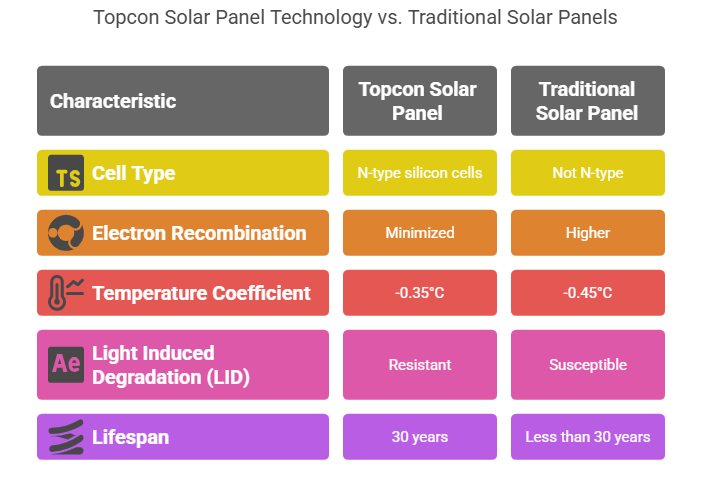
A TOPCon solar panel is a new generation of solar panel built on N-type silicon cells, with an ultra-thin oxide layer and a heavily doped polysilicon layer on the back of each cell.
This advanced design minimises electron recombination losses, allowing more efficient conversion of sunlight into electricity compared to conventional panels.
The technology offers several performance advantages over traditional solar panels.
India is a hot country, and TOPCon panels lose less output than conventional panels as rooftop temperatures rises up.
The temperature coefficient of TOPCon solar panels is around -0.35%/°C, compared with -0.45%/°C for conventional silicon panels.
Moreover, N-type TOPCon cells resist Light-Induced Degradation (LID), so they keep a steady power output across a 30-year lifespan. JAKSON Solar dual-glass Helia NXT TOPCon modules carry a 30-year power output warranty to match.
The JAKSON Group is planning to set up a 2.5GW Topcon cell manufacturing facility with an investment of about $240 million, with a strong commitment to give Indian users the best of solar technology panels.
TOPCon Solar Panel Price in India (2026)
In India, TOPCon solar panels are priced little higher, with prices ranging from ₹25 to ₹35 per watt at present for DCR-certified panels bought for a home rooftop. Every TOPCon panel uses N-type cells, so most N-type TOPCon solar panel prices in India fall in this same band.
The final TOPCon panel price you are quoted depends on the wattage of the solar panel, whether it is DCR or non-DCR, bifacial or monofacial, your order size and current market rates.
The higher price is easily offset by higher energy production and a longer solar panel life of 30 years.
TOPCon Solar Panel 1kW, 3kW and 5kW Price
Following is the approximate price of the solar panel – please take current prices from the JAKSON Solar Authorized Channel Partners while calculating the overall cost of your solar system installation.
| System Size | TOPCon Panel Approx. Cost (Panels Only) | Suitable For |
|---|---|---|
| 1 kW | ₹30,000-35,000 | Small homes using up to 150 units a month |
| 3 kW | ₹90,000-1,05,000 | Most 2-3 BHK homes, 300-400 units a month |
| 5 kW | ₹1.5-1.75 lakh | Villas and larger homes, 500-650 units a month |
The above stated prices are approximate prices of the solar panels only. A complete rooftop system has a solar inverter, mounting structure, wiring, net meter and installation cost as well.
So, the tentative TOPCon solar panel 3kW price usually is priced between ₹1.5-1.8 lakh before subsidy. For full system costs, after-subsidy figures and payback by size, see our solar panel for home price guide, or the 5 kW solar system price breakdown for bigger homes.
DCR vs Non-DCR TOPCon Solar Panel Price
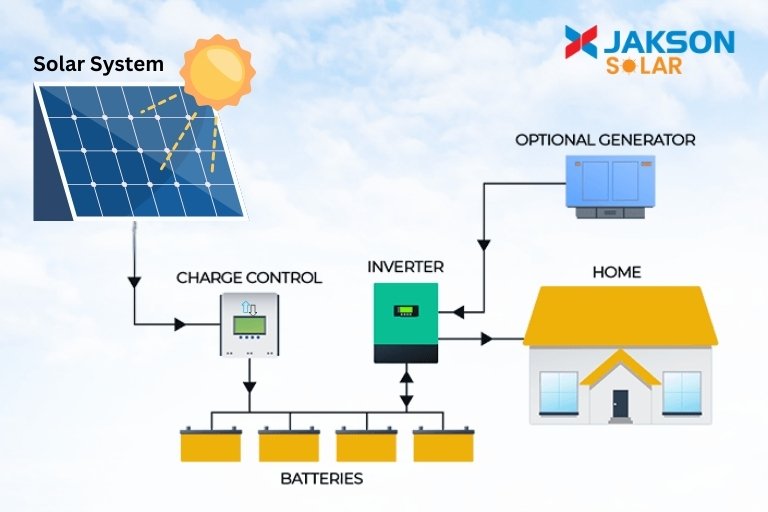
DCR (Domestic Content Requirement) TOPCon panels use solar cells made in India, and they are the only panels that qualify for the PM Surya Ghar subsidy.
Non-DCR TOPCon panels use imported cells and cost less per watt when compared with DCR panels. That is why they are commonly used in commercial and industrial projects where PM Surya Ghar subsidy is not available.
For a home system, a DCR panel usually works out cheaper once the ₹78,000 subsidy is accounted for.
Comparison of solar panel technologies showing efficiency
Government Incentives and Policy Support
The PM Surya Ghar Muft Bijli Yojana provides about 60% subsidy for systems up to 2kW and 40% for additional capacity up to 3kW.
In other words, a subsidy of ₹30,000 for 1kW systems, ₹60,000 for 2kW systems, and ₹78,000 for installations of 3kW & for installations above 3kW, there is no subsidy for extra kilowatts added to the solar installation.
For example, A 5 kW system will get a maximum subsidy of ₹78,000 only.
With a commitment to sustainable power generation solutions, the Government of India has allocated ₹20,000 crore for solar in the Union Budget 2025.
India has achieved a new milestone of solarising roofs of 10 lakh households as on 10th March 2025.
The government aims to solarise one crore homes by 2027, with roadmap milestones of 20 lakh rooftop solar installations by October 2025. This ambitious timeline creates an opportunity for potential investors to take advantage of the current subsidy program.
Performance Comparison and Technical Advantages
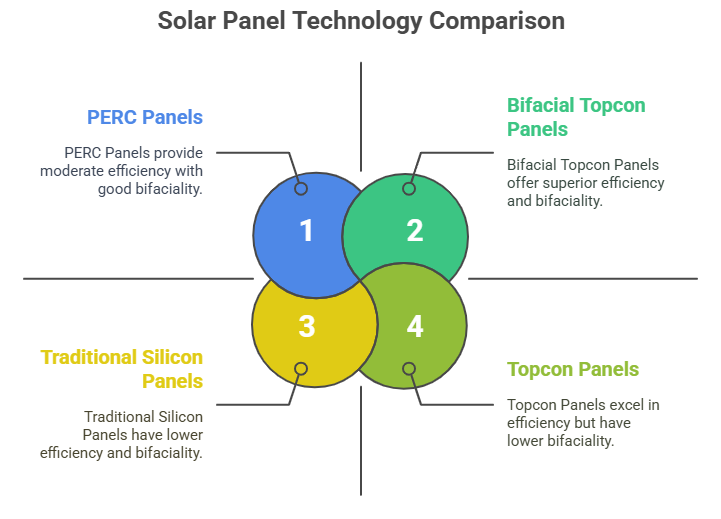
When it comes to solar panel performance, Topcon technology stands out from the crowd. These panels deliver impressive efficiency rates of 22.3-22.8%, outperforming PERC panels (20-21%) and traditional silicon panels (15-20%). In real-world terms, Topcon solar modules produce up to 3.15% more power per watt than competing technologies.
Looking for even better results? Bifacial Topcon panels take performance to the next level. With bifaciality rates reaching 85% (versus 70% for PERC), these panels capture sunlight from both sides. Under the right installation conditions, you could see up to 30% more total energy production.
India’s hot climate makes temperature performance essential. Topcon panels excel here too, maintaining higher productivity even when temperatures rise. Plus, they’re built to last, with just 1.5% degradation in the first year as compared to 2% for PERC panels. This means your investment keeps performing better over the long haul, providing reliable clean energy for years to come.
Investment analysis for different sectors
The solar system’s economics greatly depend on the size of the installation and the type of application. Residential systems have a range of 1- 3 kW, which provides the most returning value because of the maximum subsidy available as per the PM Surya Ghar Yojna.
With Topcon solar panels, a household can get ROI in about 3.5 years after applying Government Subsidies.
Analysis of Solar System ROI & Payback Periods for the commercial sector
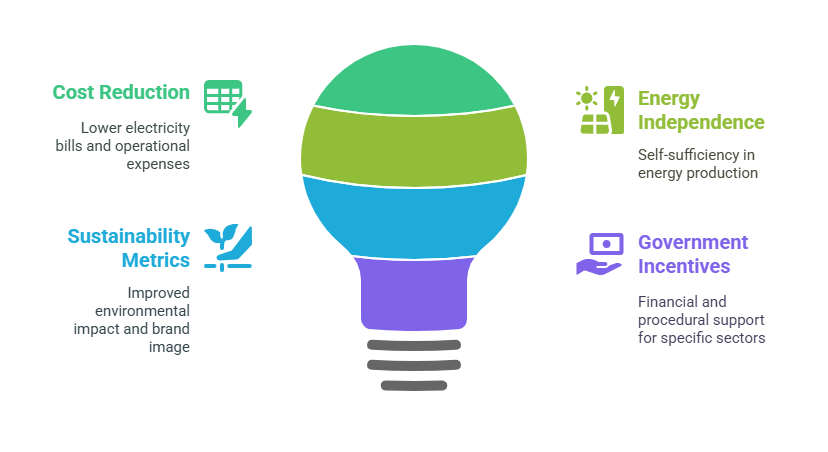
Typically, commercial and industrial applications have larger systems ranging from 100kW to several megawatts. A 100kW commercial system priced is 40-55 lakhs. Depending on the configuration, the system pays back a substantial reduction in electricity cost, energy independence facilities, operational cost reduction, and overall improved sustainability metrics.
Government incentives and priority processing under various schemes are available to educational institutions and healthcare facilities. These sectors often have consistent daytime energy consumption, which helps them offset their electricity bills considerably.
It also uplifts their brand image by contributing to the sustainable power generation movement of India.
Market Dynamics and Future Outlook
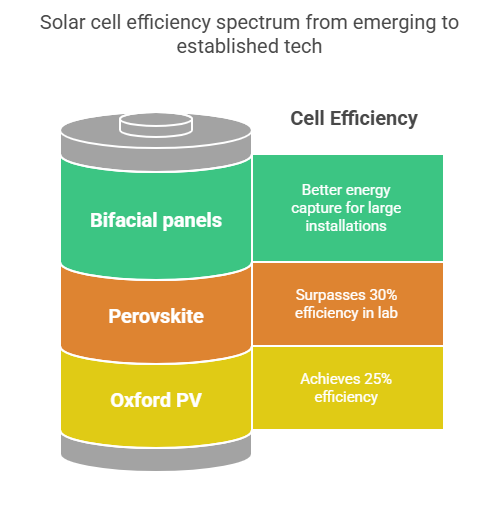
Advancements in technology continue to progress at a fast pace, as we see Oxford PV setting records of 25% efficiency, while perovskite tandem cells surpassed 30% efficiency in lab testing. Adoption of bifacial panels is also on the rise due to better energy capture for large installations.
The implementation of smart meters and net metering policies will also catalyse more solar investment by facilitating power surplus trading. With these advancements, solar adoption becomes more attractive for all consumer segments.
For more information:
Call JAKSON Solar Experts at: 1800-103-2600 (Toll Free)
OR
Email at: solar-bu@jakson.com