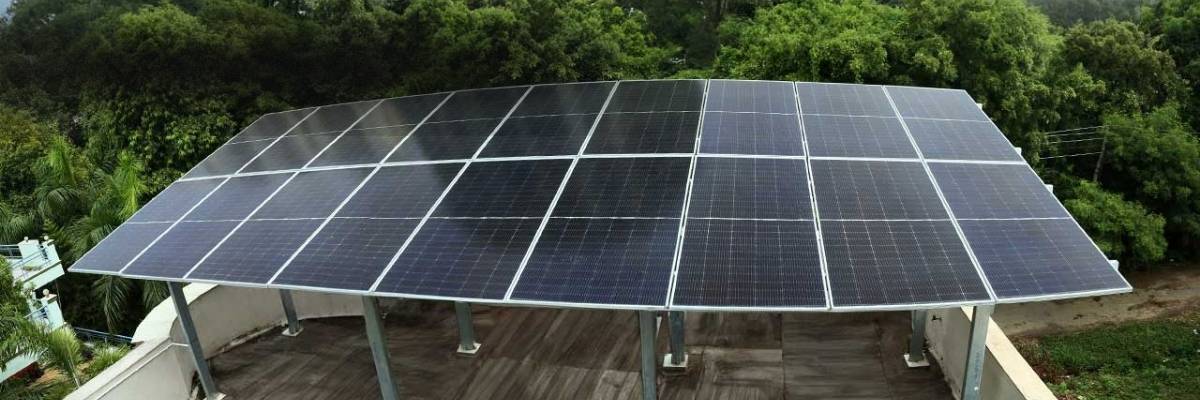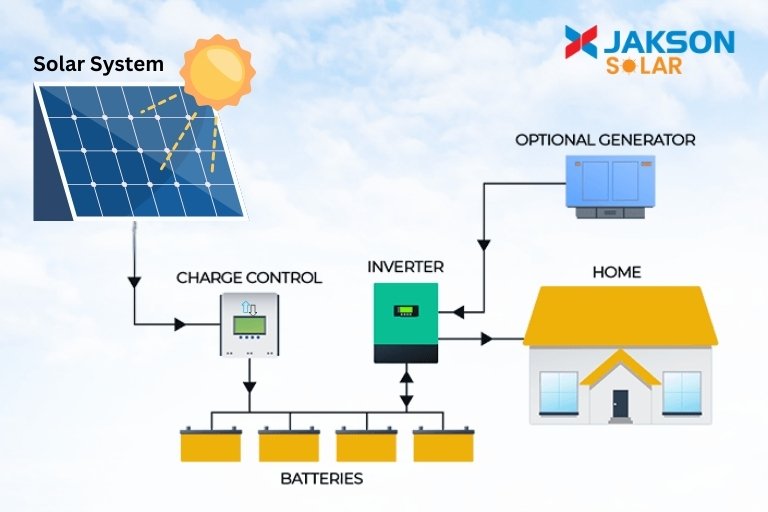

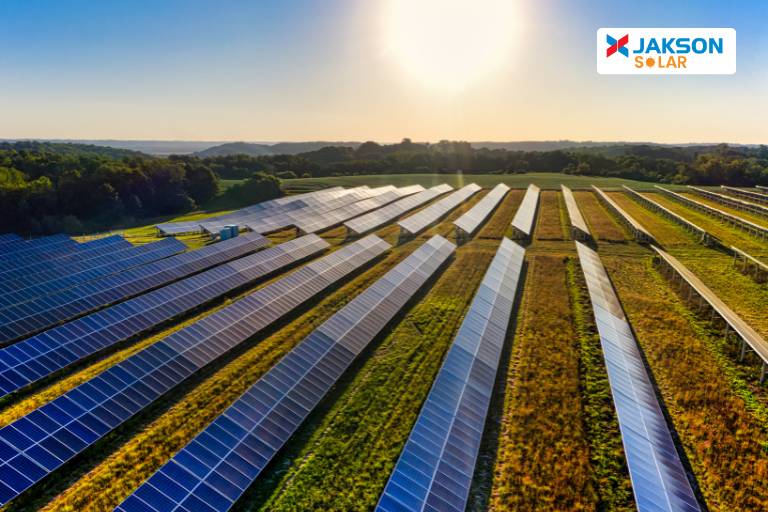
Going solar is one of the smartest decisions you have made for your home or for your business in 2025.
Thousands of homes and businesses have already switched to solar energy.
With rising electricity costs, savings on energy bills are becoming the need of the hour for homes and business owners. Moreover, the Government is also incentivising making solar more affordable than ever.
Solar energy acts as a 25-year friend with a promise of powering your homes and businesses every day. But choosing the right solar company in India can make or break your solar investment.
Whether you’re planning a residential rooftop installation, a commercial solar system, or an industrial-scale EPC solar project, asking the right questions upfront saves you from costly mistakes.
JAKSON Solar Experts are here to guide you on what separates successful solar projects from failed ones.
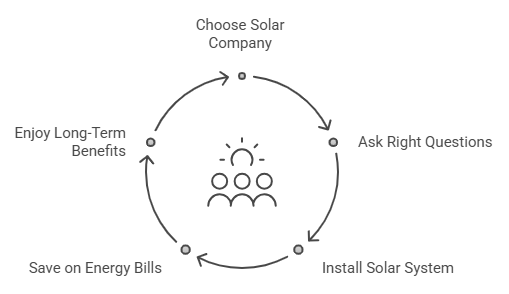
You must ask the following 15 questions if you want to have a successful solar project.
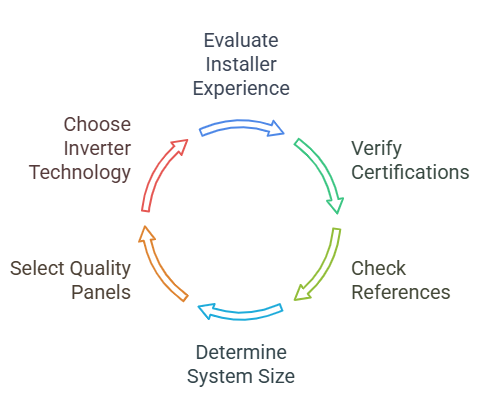
Q1. How Long Have You Been Installing Solar Systems in India?
Experience matters in solar installations. Ask your potential solar installer about their track record specifically.
What to look for:
- At least 3-5 years of solar operations in India
- What is your experience in residential/commercial/industrial solar projects?
- Knowledge of state electricity board requirements
- Understanding of seasonal weather patterns in your region
An established solar energy company should guide you through current incentive programs & solar policies.
Q2. Are You a Certified Solar Installer with Proper Licenses?
Solar installation requires specific certifications in India. Verify your installer meets industry standards.
Check for:
- MNRE (Ministry of New and Renewable Energy) empanelment
- Electrical contractor license
- ISO certifications
- Training certificates from solar panel manufacturers
Q3. Can I See References from Recent Solar Projects?
Reputation speaks volumes about a solar company’s reliability. You must ask for references from customers whose solar projects have been completed in the last 12 months.
Ask for:
- Contact details of 3-5 recent customers
- Check recent online reviews on Google and Facebook & whether these align with recent customers.
- Project photos, videos and performance data
- Case studies showing actual energy savings
Technical Expertise and System Design
Q4. How Do You Determine the Right Solar System Size for My Needs?
A professional solar installer should conduct a detailed energy audit before recommending system capacity.
They should analyse:
- Your past 12 months of electricity bills
- Roof area and orientation
- Shading patterns throughout the day
- Future energy needs and expansion plans
- Peak load requirements for commercial projects
Q5. Which Solar Panel Brands Do You Recommend and Why?
The best solar companies in India work with Tier-1 panel manufacturers that offer proven performance and reliable warranties.
Quality indicators:
- Tier-1 manufacturer status
- 25-year linear performance warranty
- BIS, IEC & ALMM certifications
- Anti-reflective coatings for Indian conditions
- Local service support availability
Q6. What Type of Inverter Technology Do You Use?
Inverter selection significantly impacts system performance and monitoring capabilities.
Consider:
- String inverters for simple installations
- Power optimisers for partial shading
- Micro-inverters for maximum energy generation
- Hybrid inverters for battery backup systems
Financial Transparency and Incentives
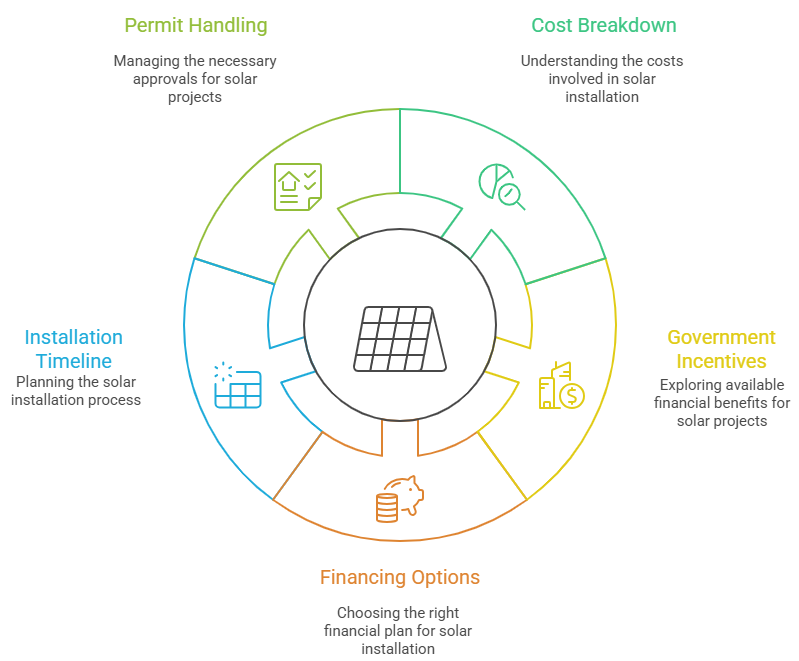
Q7. Can You Provide a Detailed Cost Breakdown?
Understanding exactly what you’re paying for prevents surprises and helps you compare quotes effectively.
Request for item-wise costing:
- Solar panels
- Mounting hardware
- Inverters and electrical components
- Installation labour and project management
- Net metering setup and government approvals
- Annual maintenance contracts
Q8. Which Government Incentives and Subsidies Can I Access?
A knowledgeable solar company should help you maximise available financial benefits.
Key programs to discuss:
- PM-KUSUM Scheme (Agricultural Applications)
- State-specific rebates and tax benefits
- Net metering policies in your area
Q9. Do You Offer Solar Financing Options?
Many homeowners and businesses prefer financing their solar installation rather than paying the full money upfront.
Finance options include:
- Solar loans with competitive interest rates
- Lease agreements with monthly payments
- Power purchase agreements (PPAs)
- CAPEX and OPEX models for commercial clients
Installation Process and Project Management
Q10. What Is Your Complete Installation Timeline?
Understanding the solar installation process helps set realistic expectations and plan accordingly.
Typical installation phases include:
- Site survey and system design (1-2 weeks)
- Permits and approvals (2-4 weeks)
- Solar Panel, Inverter & other equipment procurement (1-2 weeks)
- Installation and commissioning (2-5 days)
- Grid connection and net metering (3-4 weeks)
Q11. Do You Handle All Permits and Government Approvals?
Navigating India’s bureaucracy can be challenging for a common man until the whole process is clear. Your solar installer should manage the entire approval process.
Required approvals:
- Building plan approval (if needed)
- Electricity board net metering application
- CEA registration for solar systems 500KW & above
- Environmental clearances for large projects
Q12. Will You Use In-House Installation Teams or Subcontractors?
Quality control and accountability are easier when installers use their own trained teams.
Benefits of in-house teams:
- Consistent quality standards
- Direct communication during installation
- Clear responsibility for workmanship
- Better coordination and scheduling
Performance and Maintenance
Q13. What Performance Guarantees Do You Provide?
Beyond standard product warranties, performance guarantees protect your investment returns.
Look for:
- Minimum annual energy generation commitments
- Performance ratio guarantees (typically 75-80%)
- Degradation limits over system lifetime
- Compensation for underperformance
Q14. How Do You Monitor System Performance?
Modern solar installations should include monitoring systems that track energy production and detect issues.
Monitoring features:
- Real-time performance data
- Mobile app access
- Automatic fault detection
- Historical energy reports
- Weather correlation analysis
Q15. What Ongoing Maintenance and Support Do You Provide?
Solar systems require minimal maintenance, but regular service ensures optimal performance throughout their 25+ year lifespan.
Maintenance services include:
- Annual cleaning and inspection
- Inverter firmware updates
- Performance optimization
- 24/7 technical support
- Rapid response to system failures
Making Your Final Decision
Choosing the best solar installer in India requires balancing price, quality, and service. Do not select the lowest bid – consider the total value proposition, including warranty terms, company stability, and local support availability.
Remember that solar panel installation is a 25-year investment. Partnering with a reputable solar company ensures your system delivers promised savings while contributing to India’s clean energy future.
Use these 15 questions during consultations with potential installers. The right solar company will always welcome your questions and provide detailed, transparent answers that give you confidence in moving forward.
Take Action Today for Your Solar Project:
Request quotes from 3-4 certified solar installers in your area. Compare their responses to these questions alongside their technical proposals and pricing.
You will thank yourself 25 years from now!
For more information:
Call JAKSON Solar Experts at: 1800-103-2600 (Toll Free)
OR
Email at: solar-bu@jakson.com